Old Dog Head Tremors and Head Shaking: What It Means and When to Call the Vet
Your old dog's head bobs or shakes while she rests. Is it an ear problem, a tremor or a balance disorder? How to tell them apart, which signs mean call the vet now, how to film it and how to keep her safe at home.
Your old dog is lying beside you and her head starts to bob, slowly, side to side or up and down. You say her name and wonder if that was a tremor, an itchy ear or the first sign of something worse. Head shaking and head bobbing look alike, but they have different causes, and a loss of balance is a reason to call a vet now.
Quick answer: A new head tremor in an older dog deserves a vet visit, even if she acts fine. Call right away if she also loses balance, circles, falls, has darting eyes or collapses. Film the episode on your phone to show the vet.
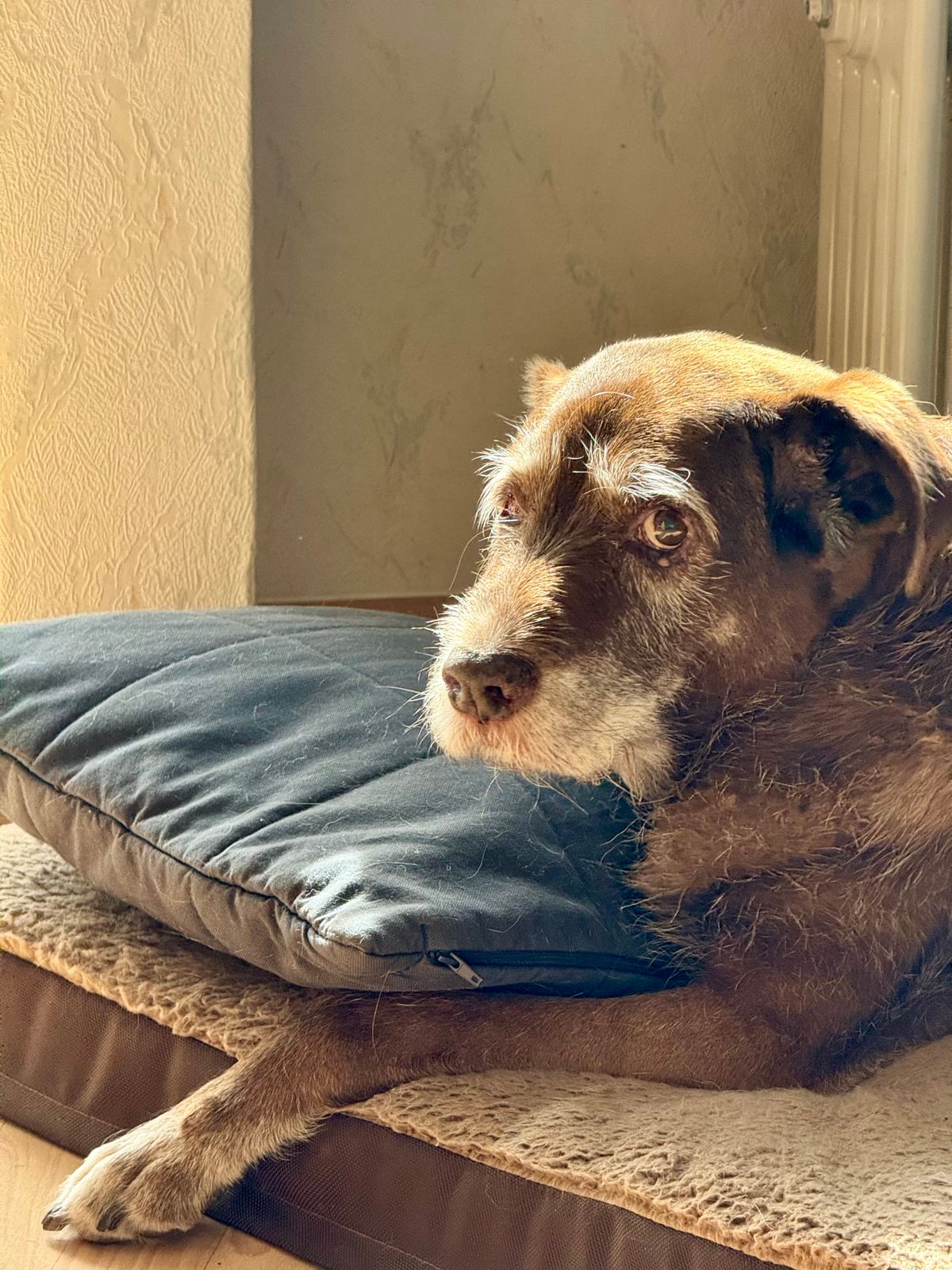
Go to a vet now if
- She suddenly loses balance or coordination, falls or circles to one side
- Her head tilts and her eyes dart back and forth
- She cannot stand, vomits or seems confused
- She has a seizure or collapses
VCA says signs of vestibular disease "usually develop suddenly, often in less than an hour." It also says to contact your vet right away if you see them, because a worse problem may be behind it if your dog does not improve.
Three things that look alike
| What you see | Possible cause | What helps tell it apart |
|---|---|---|
| Head shaking plus scratching, odor or discharge | Ear infection | VCA says many dogs shake their heads and scratch their ears, and the ears may be red with a bad odor and a black or yellowish discharge |
| Sudden loss of balance, head tilt, darting eyes | Vestibular disease | Comes on fast. VCA says idiopathic cases are more common in older dogs, and most dogs recover within two to three weeks |
| Rhythmic bobbing she cannot control, often while resting | Idiopathic head tremor, or another neurological cause | A vet neurology practice says the cause of idiopathic tremors is unknown and the tremors are not dangerous |
Only your vet can tell which one it is. Do not put drops in her ears at home. VCA says your veterinarian must diagnose the exact cause of an ear problem to pick the right treatment.

What a vet looks for
A neurology practice that writes about head tremors says other possible causes include cerebellum disorders, toxin exposure, hereditary conditions, brain injury, kidney disorders, low blood sugar and other central nervous system problems. It says to call your local vet first, who may refer you to a veterinary neurologist.
That is why a tremor that is new in an older dog is worth an exam, even if she eats and plays as usual. Bring a list of medicines, supplements and anything she might have chewed.
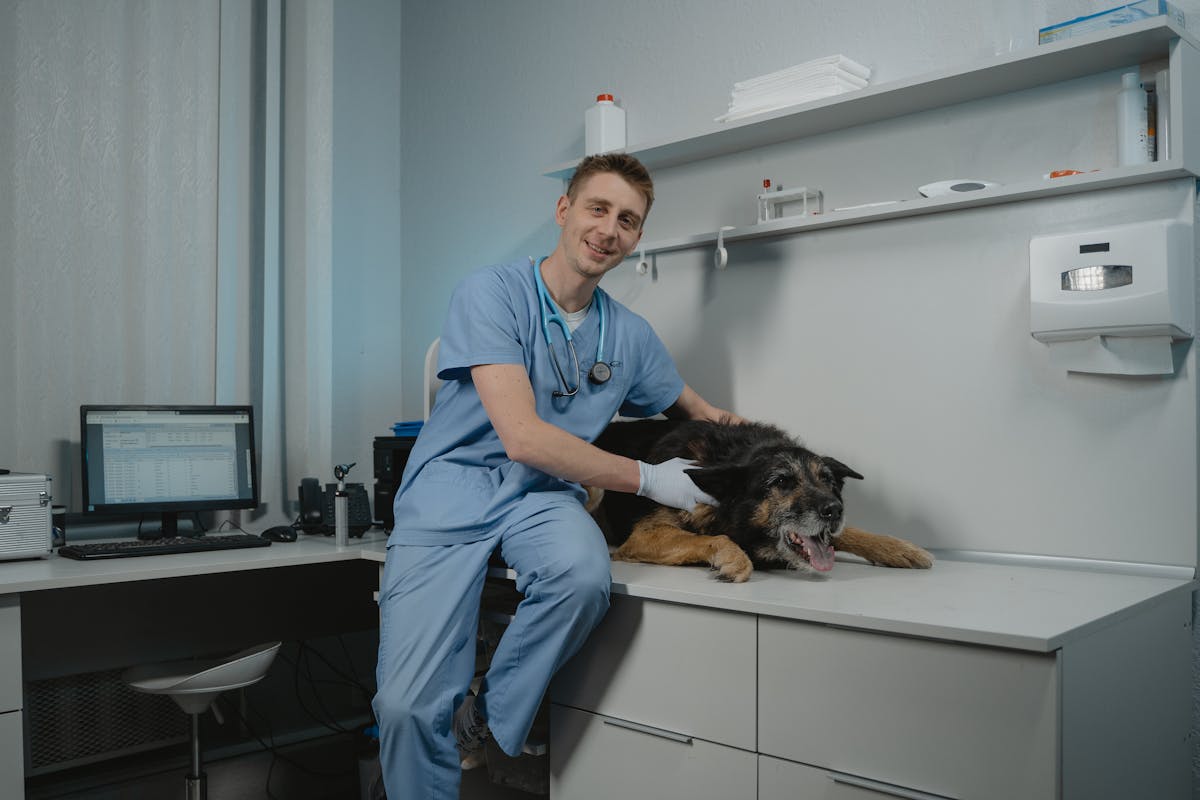
How to film it for your vet
- Record 20 to 30 seconds of the episode with her head in view and the whole body if possible
- Note the date, time and how long it lasted
- Film her standing and walking too, to show balance
- Note what she did right before and after
Keep her safe at home
- Put non-slip mats where she walks so a wobble does not become a fall
- Keep her bed low so she does not have to climb
- Block stairs when you are not around

Checklist for this week
- Phone video of at least one episode
- Appointment booked with your vet
- Notes on balance, eating, drinking and ears
- Medicine and supplement list ready
- Non-slip surface on slick floors
FAQ
Is head shaking in an old dog normal?
It is common, but it is not something to ignore. VCA says ear infections often cause head shaking and scratching.
Can an old dog have head tremors and be fine?
A vet neurology practice says idiopathic head tremors are not dangerous, but a vet must rule out other causes first.
Why does my old dog shake her head and lose balance?
Sudden loss of balance with a head tilt can mean vestibular disease. Call your vet right away.
Do head tremors hurt?
The neurology practice says dogs probably are not bothered by idiopathic tremors, but only a vet exam can tell you what you are seeing.
Sources: VCA: Vestibular Disease in Dogs, VCA: Ear Infections in Dogs (Otitis Externa), Veterinary Neurology and Imaging of the Chesapeake: Head Tremors in Dogs.
Related guides: Old dog vestibular disease home care, Ear infections in floppy-eared seniors, Best non-slip mats for old dogs.
Educational only, not veterinary advice. As an Amazon Associate, SILVERPAW earns from qualifying purchases.
Shop related senior dog essentials
Affiliate disclosure: SILVERPAW is a participant in the Amazon Associates Program. As an Amazon Associate, SILVERPAW earns from qualifying purchases at no extra cost to you. We only recommend products we believe help senior dogs. Prices, ratings, reviews, and stock are confirmed on Amazon.