Old Dog Won't Stop Barking? Causes (Hearing, Dementia, Pain) and What to Do (2026)
Old dog won't stop barking, especially at night? See the vet first. Causes include pain, hearing loss and dementia. A pattern table, checklist and what helps at home.
Your 13-year-old dog never barked at much, and now he's barking at 2 a.m. at an empty hallway. A sudden change in barking is worth a vet visit before anything else, because pain, hearing loss and canine cognitive dysfunction can all look alike. Here's how to sort the causes, what to track, and what can help at home while you wait for the appointment.
Quick pick: Book a vet visit first, then keep a one-week barking log (time, place, trigger) to bring with you.
If you see collapse, labored breathing, a swollen belly, a seizure or sudden confusion, go to an emergency vet now.

Photo: Lubna on Pexels
Why an old dog starts barking: causes and patterns
| Pattern | Possible cause | What to tell your vet |
|---|---|---|
| Barks at night, seems lost or stares | Cognitive dysfunction | Sleep changes, accidents, pacing |
| Whines or barks when lying down or getting up | Pain | Stiffness, slipping, time of day |
| Barks without reacting to your voice or the doorbell | Hearing loss | Whether he startles when touched |
| Barks when left alone | Separation anxiety | Time of day and how long you're gone |
VCA lists excessive vocalization among the signs of cognitive dysfunction syndrome, but adds that many diseases can mimic it, and chronic pain can change a dog's behavior a lot. VCA also lists whining or whimpering while trying to get comfortable, and pacing, as pain signs. The Merck Veterinary Manual says age-related hearing loss is common in older animals.
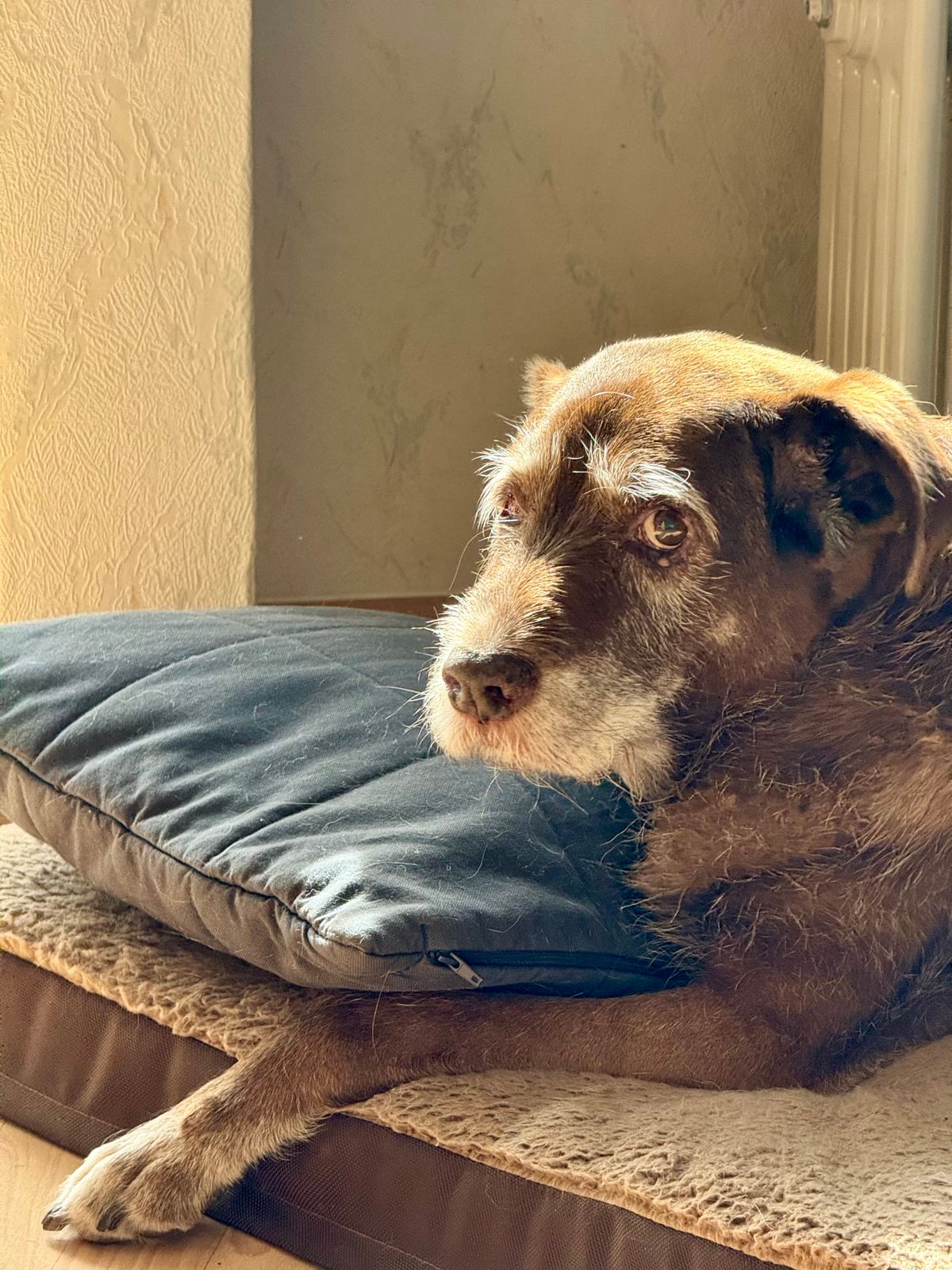
Photo: Ranevskaja on Pexels
What can help at home
Start with the vet visit, then adjust the home around what the vet finds. If pain is the cause, treating it comes first. Changes that cost nothing: a dim night light, a consistent bedtime walk, a bathroom trip right before bed, and a calm voice instead of shouting when he barks.

Photo: Vikeph on Pexels
Barking log checklist
- Time each episode starts and how long it lasts.
- Note what's happening: alone, night, after meals, when you leave.
- Watch for pacing, staring, or standing in corners.
- Check whether he reacts when you clap behind him, out of sight.
- Look for pain signs: groaning when he stands, slow to lie down.
- Record a 30-second video on your phone.
- Book the vet visit and bring the log and video.

Photo: Ismail Aybey on Pexels
FAQ
Why does my old dog bark at nothing?
It can be dementia, hearing loss, pain or anxiety. Only your vet can tell which, so don't assume it's just age.
Why does he bark more at night?
VCA lists night waking and disrupted sleep as signs of cognitive dysfunction. Pain from lying down can look similar, so have it ruled out.
Should I use a bark collar?
Talk to your vet first. A collar doesn't treat pain or confusion, which are the likely causes at this age.
Can hearing loss make a dog bark more?
Hearing loss is common in older dogs, according to the Merck Veterinary Manual, and a dog who can't hear himself may sound different. We can't say it causes more barking, so ask your vet to check his ears and hearing.

Photo: Diegolf11 on Pexels
Sources
- VCA Animal Hospitals: Cognitive dysfunction syndrome in dogs
- VCA Animal Hospitals: How do I know if my dog is in pain?
- Merck Veterinary Manual: Deafness in animals
Related
- Senior Dog Dementia at Night: Why They Bark and Pace
- Caring for a Senior Dog with Hearing Loss
- Old Dog Whining at Night
As an Amazon Associate, SILVERPAW earns from qualifying purchases.
Shop related senior dog essentials
Affiliate disclosure: SILVERPAW is a participant in the Amazon Associates Program. As an Amazon Associate, SILVERPAW earns from qualifying purchases at no extra cost to you. We only recommend products we believe help senior dogs. Prices, ratings, reviews, and stock are confirmed on Amazon.